

What is the power consumption of landscape wall lights?
Jun 30, 2025
Hey there! As a supplier of Landscape Wall Lights, I often get asked about the power consumption of these nifty little fixtures. It's a crucial topic, especially when you're looking to light up your outdoor space efficiently and cost - effectively. So, let's dive right in and explore what affects the power consumption of landscape wall lights.
Factors Influencing Power Consumption
1. Type of Bulb
The type of bulb used in landscape wall lights is a major determinant of power consumption. The most common types are incandescent, halogen, fluorescent, and LED bulbs.
-
Incandescent Bulbs: These are the old - school bulbs that have been around for ages. They work by heating a filament until it glows. The problem is, they're incredibly inefficient. A large portion of the energy they consume is wasted as heat rather than light. For instance, a typical 60 - watt incandescent bulb might only convert about 5% of the energy into visible light. If you're using incandescent bulbs in your landscape wall lights, you're likely to see a significant spike in your electricity bill.
-
Halogen Bulbs: Halogen bulbs are a bit more efficient than incandescent ones. They use a halogen gas inside the bulb to increase the lifespan and efficiency of the filament. However, they still consume a fair amount of power. A 50 - watt halogen bulb is commonly used in landscape lighting, and while it provides a bright, warm light, it's not the most energy - efficient option out there.
-
Fluorescent Bulbs: Fluorescent bulbs are known for their energy efficiency. They work by passing an electric current through a gas - filled tube, which then emits ultraviolet light that is converted into visible light by a phosphor coating on the inside of the tube. A fluorescent bulb can use up to 75% less energy than an incandescent bulb to produce the same amount of light. But they're not as popular in landscape wall lights because they can be a bit bulky and may not work well in cold temperatures.
-
LED Bulbs: LED (Light - Emitting Diode) bulbs are hands down the most energy - efficient option for landscape wall lights. They consume up to 80% less energy than incandescent bulbs and have a much longer lifespan. An LED bulb can last for up to 25,000 hours or more, which means you won't have to replace them as often. For example, a 10 - watt LED bulb can produce the same amount of light as a 60 - watt incandescent bulb. If you're looking for a long - term, energy - efficient solution for your landscape wall lights, Landscape Wall Lights with LED bulbs are the way to go.
2. Brightness and Lumens
The brightness of a landscape wall light is measured in lumens. The higher the lumens, the brighter the light. Naturally, a brighter light will consume more power. When choosing landscape wall lights, it's important to consider how much light you actually need. For example, if you're using the lights to illuminate a small pathway, you don't need a super - bright light. A light with around 200 - 300 lumens should be sufficient. On the other hand, if you're lighting up a large patio or a garden area, you might need lights with 500 - 1000 lumens or more. But keep in mind that as you increase the lumens, you're also increasing the power consumption.

3. Usage Time
How long you leave your landscape wall lights on also affects power consumption. If you have your lights on all night long, you're going to use a lot more electricity than if you only turn them on for a few hours in the evening. Some landscape wall lights come with built - in timers or motion sensors, which can help you control the usage time. For example, a motion - sensor light will only turn on when it detects movement, which can significantly reduce the amount of time the light is actually on.
Calculating Power Consumption
To calculate the power consumption of your landscape wall lights, you can use a simple formula:
Power Consumption (in kilowatt - hours) = Power (in watts) x Time (in hours) / 1000
Let's say you have a landscape wall light with a 10 - watt LED bulb, and you leave it on for 5 hours every night. The power consumption would be:
10 watts x 5 hours / 1000 = 0.05 kilowatt - hours per day
If you have multiple lights, you can calculate the total power consumption by adding up the power consumption of each individual light.
Energy - Saving Tips
-
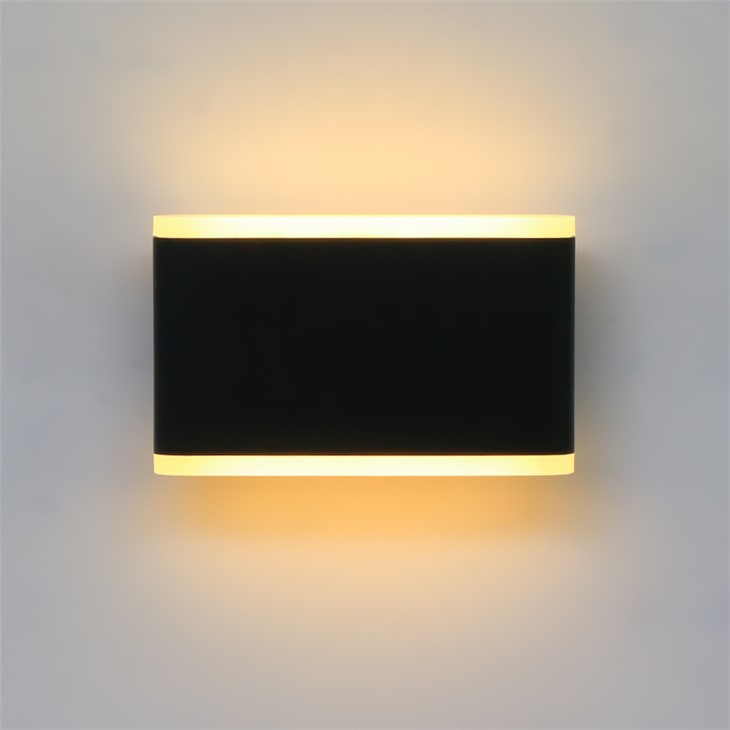
Choose LED Lights: As mentioned earlier, LED lights are the most energy - efficient option. They not only save you money on your electricity bill but also reduce your carbon footprint. Check out our Black Outdoor Lights Wall Mounted and Black Up and Down Outdoor Lights, all of which are equipped with high - quality LED bulbs.
-
Use Timers or Sensors: Install timers or motion sensors on your landscape wall lights to control when they turn on and off. This way, you can ensure that the lights are only on when you actually need them.
-
Opt for Lower Lumens: Unless you have a specific need for bright lights, choose landscape wall lights with lower lumens. This will reduce power consumption without sacrificing too much visibility.
Conclusion
The power consumption of landscape wall lights depends on several factors, including the type of bulb, brightness, and usage time. By choosing energy - efficient LED bulbs, controlling the usage time with timers or sensors, and opting for lower - lumen lights, you can significantly reduce your energy consumption and save money on your electricity bill.
If you're in the market for high - quality, energy - efficient landscape wall lights, we're here to help. We offer a wide range of Landscape Wall Lights that are designed to meet your needs and budget. Whether you're looking for a simple wall - mounted light or a more decorative up - and - down light, we've got you covered. Contact us to discuss your requirements and let's create the perfect lighting solution for your outdoor space.
References
- "Lighting Basics" by the U.S. Department of Energy
- "LED Lighting Facts" by the Lighting Research Center at Rensselaer Polytechnic Institute